
By Omileha Isaac, Dayyabu Yusuf, Bolaji Umar, Anita Hintiya Hunohidoshi.
World Mental Health Day 2026 (Oct 10)
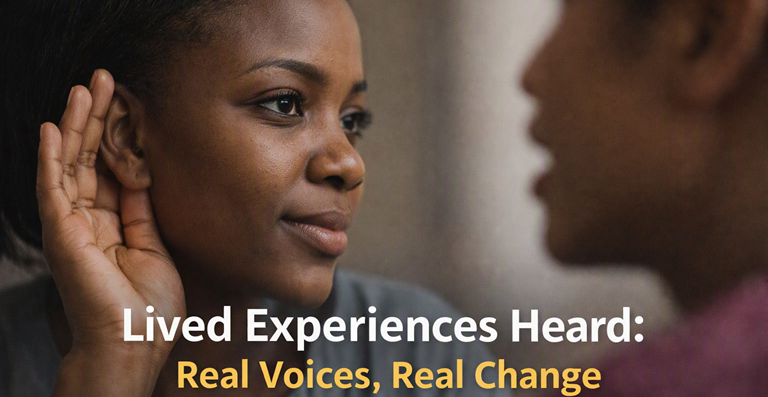
When someone says they are struggling with their mental health, what happens next matters. Do we listen? Do we take them seriously? And does what they share change the support they receive? This year’s World Mental Health Day theme, “Lived Experiences Heard: Real Voices, Real Change,” asks us to move beyond simply encouraging people to speak. It asks governments, health systems and communities to make room for their experiences in the decisions that affect them (World Federation for Mental Health, 2026; WHO, 2026).
The scale of the need
The need is significant. The World Health Organization (WHO, 2025a) estimates that more than one billion people worldwide live with a mental health condition. Around 14% of adolescents aged 10–19 are affected (WHO, 2025b).
In Nigeria, estimates vary. A 2025 protocol for a national systematic review notes figures ranging from 12.1% of adults experiencing a mental disorder at some point in their lives to estimates of 20–30% of the population. The protocol also points to limited and fragmented national research (medRxiv, 2025). In 2025, psychiatrists were reported to have warned that as many as 50 million Nigerians could be affected, with more than three-quarters unable to access professional care (Arise News, 2025). These figures come from different sources and should not be treated as directly comparable, but they point to a substantial need for support.
Access is shaped by more than the availability of specialists. Published estimates put the number of psychiatrists in Nigeria at fewer than 300 for a population exceeding 200 million. Other estimates suggest that only 3.3–4% of the health budget goes to mental health, with more than 90% of that spending concentrated in a small number of neuropsychiatric hospitals (Wada et al., 2021; Zikoko, 2026). This severe resource centralization directly affects frontline primary care; Adeleke, Akinbode et al. (2025) found that family physician trainees spend only about two months in mental health postings, highlighting the lack of robust mental health infrastructure and training within the wider health system.
Stigma can make an already difficult situation harder. A national survey cited in a 2021 review found that some Nigerians attribute mental illness to drug use or spiritual possession, and that families may seek help from prayer houses before formal health services (Wada et al., 2021). Faith and community networks can be important sources of support, but people also need safe pathways to qualified care. No one should have to choose between being treated with dignity and seeking help.
Mental health is part of everyday life
Mental health is shaped by our bodies, our thoughts and the circumstances around us. Poor sleep, family pressures, relationships, school, work, money worries and social expectations can all affect how someone feels. Sometimes support begins with something small: noticing a change, asking how someone is doing, listening without judgement, or helping them find appropriate care.
Families, friends, teachers, peers, faith leaders and community health workers can help people feel less alone. They are not a replacement for qualified mental health professionals, but they can be an important bridge to support, especially where specialist services are difficult to access. The way we respond matters. Dismissing someone as weak, dramatic or spiritually deficient can make it harder for them to speak again.
A legal framework, and the work still ahead
For over a century, Nigeria relied on the 1916 Lunacy Ordinance, renamed the Lunacy Act in 1958, with bills in 2003 and 2013 stalling before enactment (Wada et al., 2021). That changed with the Nigeria’s National Mental Health Act 2021, assented to on 28 December 2022 and published in the Official Gazette two days later, it provides a historic legal framework for protecting the rights of people with mental health conditions and improving mental health services (Federal Republic of Nigeria, 2022). The Act explicitly mandates the creation of a Department of Mental Health Services in the Federal Ministry of Health, a Mental Health Fund, and a Mental Health Assessment Committee to handle appeals and complaints. It sets out critical protections against discrimination, outlaws degrading treatment like chaining, and formalizes rights regarding informed consent and confidentiality.
The law is an important step, but a law on paper does not automatically translate into accessible services. Implementation requires funding, trained workers, support at community and primary-care levels, and clear ways for people to raise concerns and influence how services are delivered.
Listening must lead to meaningful participation
This year’s theme calls for more than awareness campaigns or inviting someone to tell their story at an event. The WHO framework for meaningful engagement says people with lived experience should be included respectfully and equitably in the planning, delivery and monitoring of services. It warns against tokenism: asking people to speak but not giving them any influence over decisions (WHO, 2023).
WHO’s Mental Health Atlas 2024 reported that 45% of responding countries had ongoing collaboration with people with lived experience and family advocacy groups in planning, delivering or monitoring mental health services (WHO, 2025c). That leaves considerable room for stronger participation. For Nigeria, the question is not only whether people are invited to the table, but whether their views are heard, taken seriously and reflected in policies and services.
This also means recognising that no single person can speak for everyone. Young people, caregivers, people living with mental health conditions, rural communities and frontline workers may face different barriers. Their participation should be safe, accessible and supported, and they should know what happened as a result of sharing their views.
What this looks like in SFH’s work?
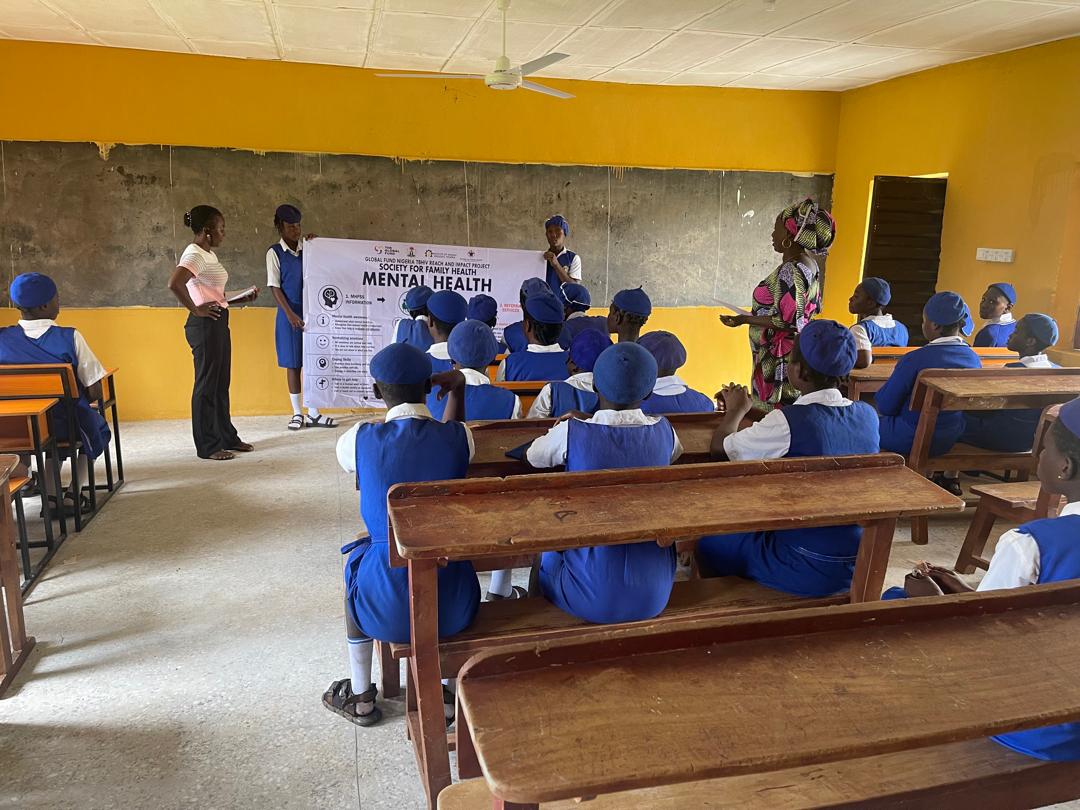
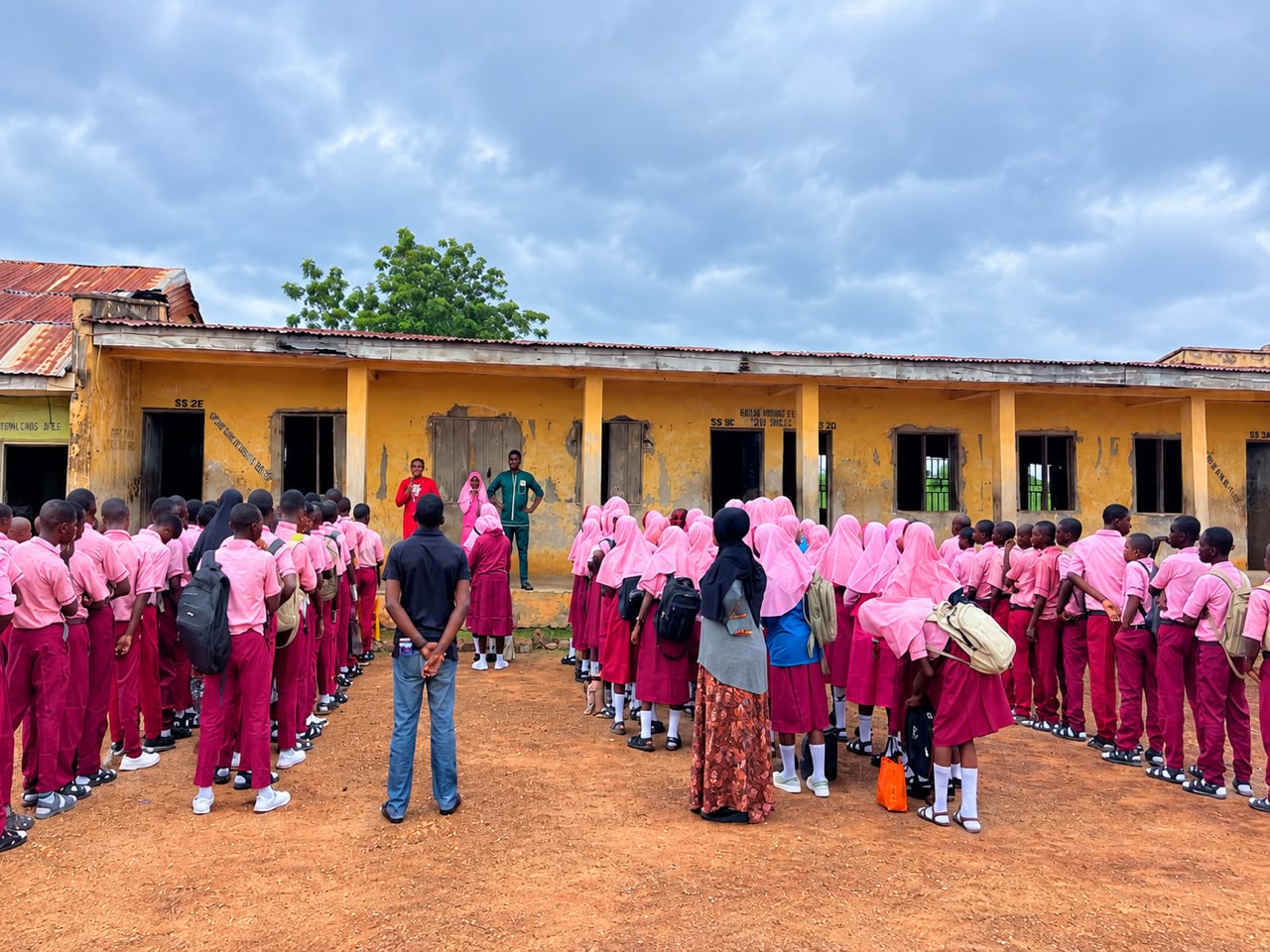
At Society for Family Health (SFH), mental health is part of work with adolescents and young people in schools, health facilities and communities. In Kwara and Gombe States, the Adolescent and Young People team includes mental health education in school-based activities under the Global Fund-supported Nigeria TB/HIV Reach and Impact Project, implemented through the Institute of Human Virology, Nigeria. Through school health clubs and assemblies, students discuss how sleep, friendships, family life, social media and cultural expectations can affect wellbeing. Sessions also encourage young people to recognise emotions, build coping skills and seek support from a trusted adult.
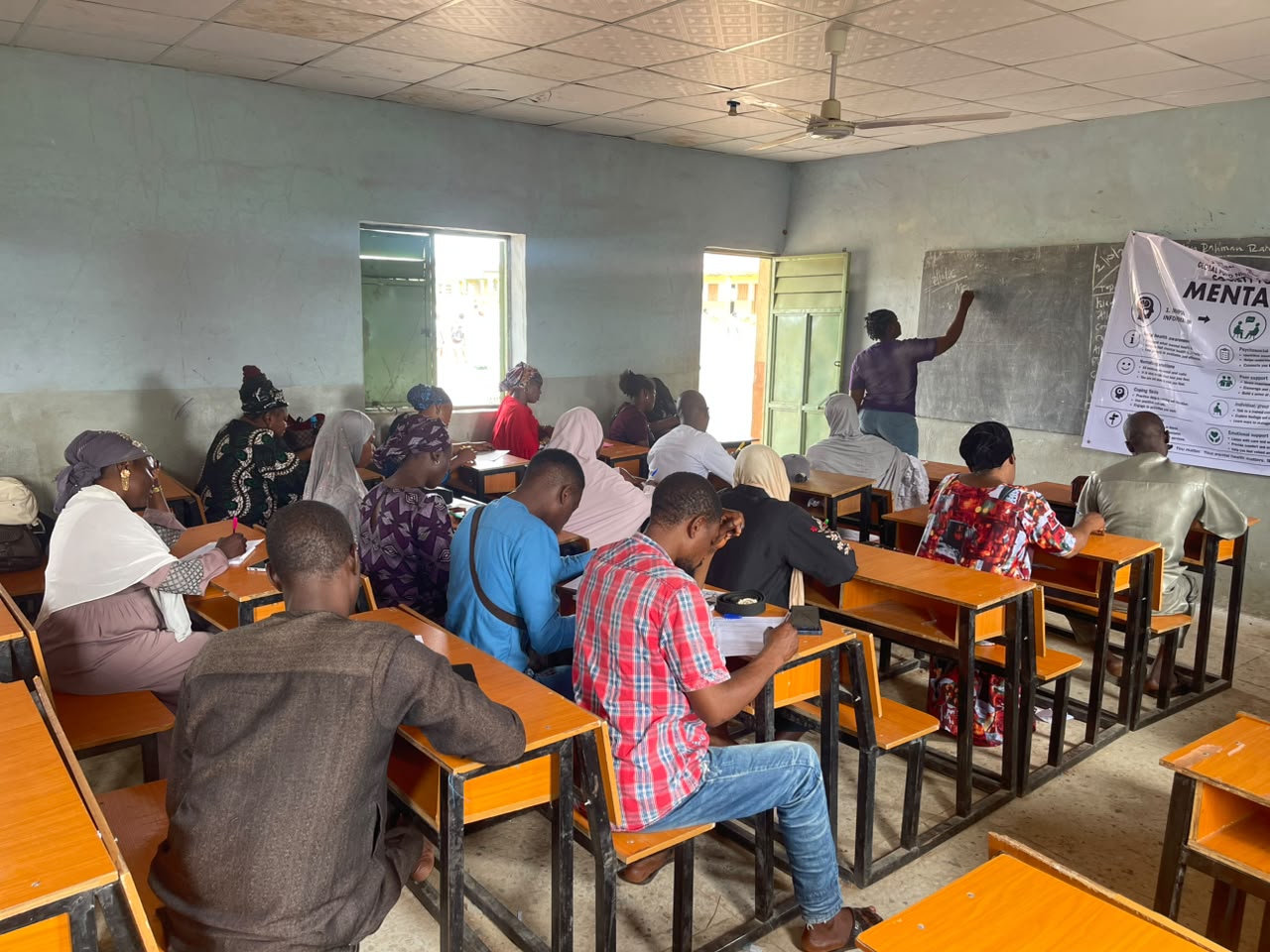
Teachers are also engaged through sessions that introduce mental health in adolescents and adults. The original programme description refers to the Depression Anxiety Stress Scales (DASS-21), a 21-item self-screening tool covering the previous week. It is important to be clear that a screening result is not a diagnosis and that anyone who is concerned about their wellbeing should be supported to seek advice from a qualified professional.
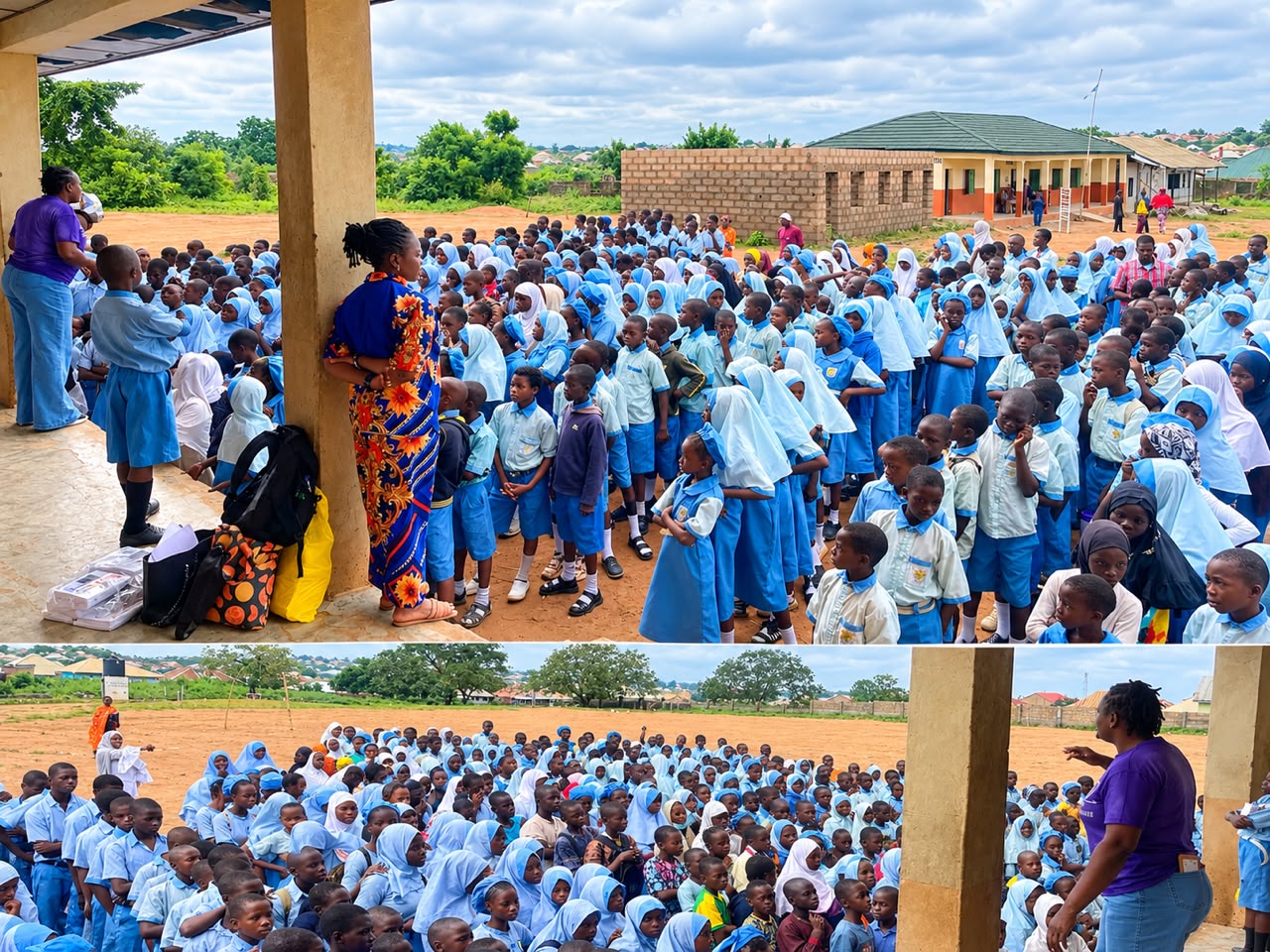
To move away from tokenism and ensure real voices drive these interventions, SFH actively incorporates participatory feedback loops. Rather than treating the DASS-21 as a top-down clinical assessment, students and peer educators use post-session reflection circles and safe space feedback channels to share what feels useful, what is missing, and what should change. This ensures that the design of the school health clubs adapts dynamically to the real, lived pressures the youth articulate.
In Kaduna State, SFH’s Strengthening ALHIV Resilience within Communities and Retention in Care (STAR-C) project, funded by ViiV Positive Action, supports adolescents living with HIV as they move towards managing their treatment more independently. The project includes peer support and mentorship, psychosocial support alongside sexual and reproductive health education, safe spaces in health facilities, and support for caregivers to communicate with young people in an age-appropriate way.
In October 2025, STAR-C had worked with state partners to train healthcare workers and peer supporters from 10 health facilities across seven local government areas. The training focused on recognising and responding to depression, anxiety, psychosis and emotional distress among children and adolescents living with HIV, alongside empathetic communication, confidentiality, referral and follow-up.
SFH's support also reaches the institutions that make and oversee health policy. In August 2026, SFH’s Reproductive, Maternal, Neonatal, Child, Adolescent and Elderly Health (RMNCAEH) team worked with the National Assembly on a two-day training of trainers on counselling models for family planning, with about 40 participants from the National Assembly’s health structures. The aim was to build a group of trainers who can pass the skills on within the National Assembly and to wider communities, as part of a longer-term effort to establish SFH as a technical partner to the legislature (NALTF, 2026).
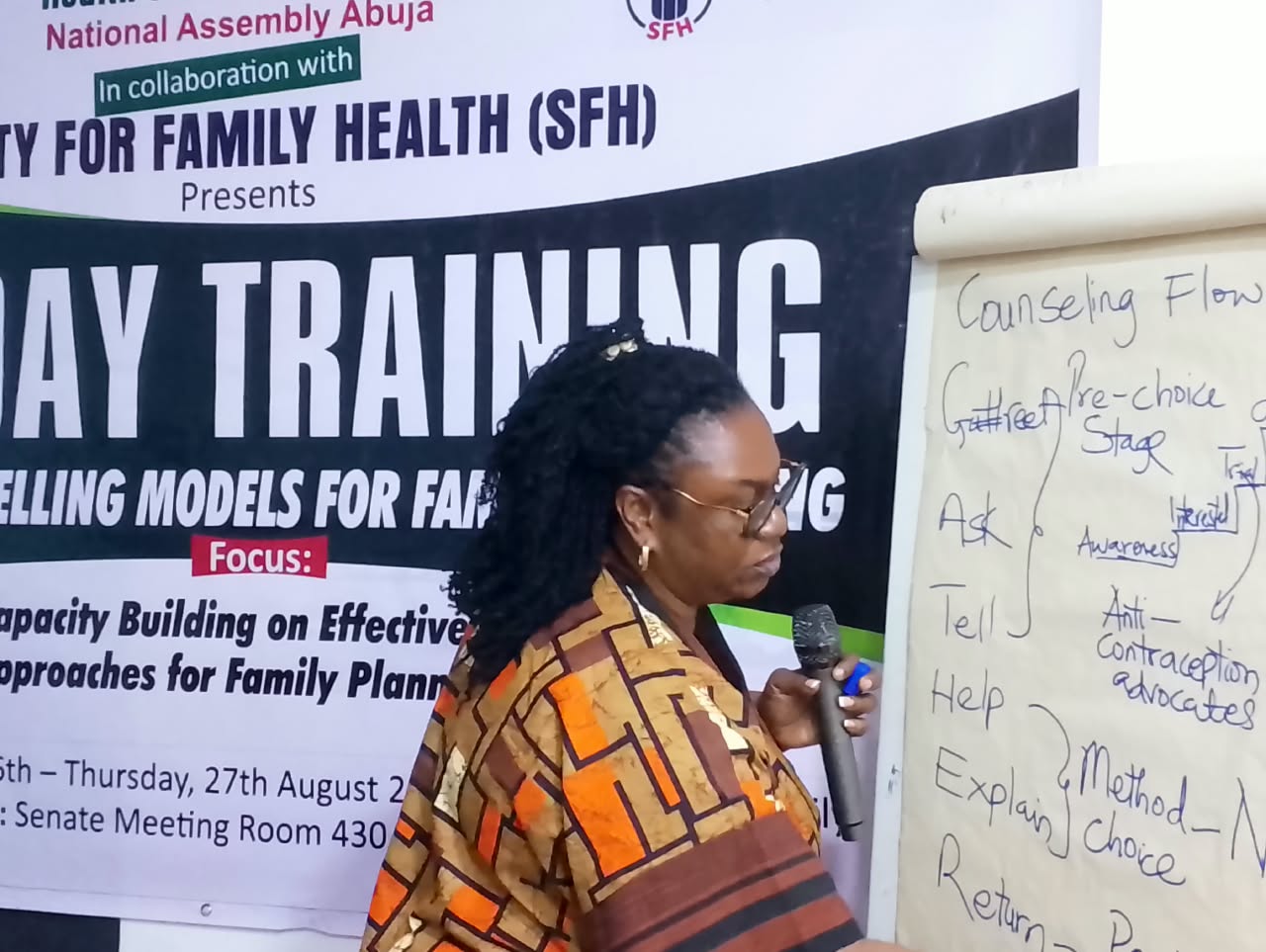
The training focused on family planning reflected mental health nonetheless, because the skills it stressed are the same ones that psychosocial support relies on: giving accurate information, listening, communicating without judgement, addressing concerns and respecting people’s informed choices (NALTF, 2026). These principles also run through the consent and participation rights in the National Mental Health Act (Federal Republic of Nigeria, 2022). The National Assembly makes the laws and approves the money, including payments into the Mental Health Fund the Act created, so partnerships like this one help ensure that those who support legislators are practised listeners, better placed to carry community voices into decisions about mental health services.
These activities help bring mental health conversations closer to where young people learn and receive care. The next step is to keep using participant feedback to improve the work around mental health.
What can each of us do?
Mental health is not the responsibility of one ministry, hospital or organisation. Government has a role in funding and implementing the National Mental Health Act and strengthening services. Donors and implementing partners can fund community-based support and ensure people with lived experience help shape and evaluate programmes. Schools can make space for honest conversations, while parents and caregivers can treat distress as a health concern rather than a character flaw.
For the rest of us, we can start by checking in with someone and listening without rushing to judge or fix everything. If someone is struggling, ask what kind of support would help and encourage them to connect with a qualified professional or health facility when needed. If you are struggling yourself, reaching out to someone you trust is a meaningful first step.
Nigeria’s mental health future depends on services, funding and trained people. It also depends on whether those services learn from the people who use them. Real voices are already speaking. The responsibility now is to listen, respond and make sure that what people share can lead to real change.
References:
Arise News (2025) Medical experts warn 50 million Nigerians battling mental illness, demand action on Mental Health Act. Available at: https://www.arise.tv/medical-experts-warn-50-million-nigerians-battling-mental-illness-demand-action-on-mental-health-act
Federal Republic of Nigeria (2022) National Mental Health Act, 2021 (Act No. 46; assented to 28 December 2022), Official Gazette No. 229, Vol. 109, Lagos, 30 December, pp. A1407–A1438.
Global Mental Health (2026) 'Mental health laws in Africa: perspectives from Cabo Verde, Egypt, Ghana, Kenya and Nigeria', published 26 January. doi:10.1017/gmh.2026.10141
medRxiv (2025) 'Prevalence of mental health illness in Nigeria: protocol for a systematic review and meta-analysis' [preprint]. doi:10.1101/2025.02.22.25322716
National Assembly Library Trust Fund (NALTF) (2026) ‘National Assembly, SFH partner to strengthen family planning counselling’, 27 August. Available at: https://naltf.gov.ng/national-assembly-sfh-partner-to-strengthen-family-planning-counselling/
NAN News (2026) FG moves to decriminalise attempted suicide. Available at: https://nannews.ng/fg-moves-to-decriminalise-attempted-suicide/
Pakistan Observer (2026) 'World Mental Health Day', 10 October. Available at: https://pakobserver.net/?p=781161
PLOS Mental Health (2025) 'Mental health care services in Nigeria: a qualitative enquiry from family physicians' perspective', published 25 September. doi:10.1371/journal.pmen.0000285 (Adeleke O.T, Akinbode A.E et al.)
Society for Family Health (SFH) (2026) Brief on the Strengthening ALHIV Resilience within Communities and Retention in Care (STAR-C) mental health programme, Kaduna State. Unpublished programme document.
ThisDay (2026) 'Decriminalising attempted suicide', 28 August. Available at: https://www.thisdaylive.com/2026/08/28/decriminalising-attempted-suicide/
Triumph Behavioral Health (2025) 'The 5 C's of Mental Health', 28 June. Available at: https://www.triumphbh.org/new-blog/5-cs-of-mental-health
Wada, Y.H., Rajwani, L., Anyam, E., Karikari, E., Njikizana, M., Srour, L. and Khalid, G.M. (2021) 'Mental health in Nigeria: a neglected issue in public health', Public Health in Practice, 2, 100166. doi:10.1016/j.puhip.2021.100166
West African Journal of Medicine (2021) 'An X-ray of the National Mental Health Act 2021 of Nigeria: opportunities, limitations and the way forward', 40. Available at: https://www.mentalhealthdataprizeafrica.aphrc.org/repository/paper/33666/an-x-ray-of-the-national-mental-health-act-2021-of-nigeria-opportunities-limitations-and-the-way-forward
World Federation for Mental Health (2026) World Mental Health Day 2026: announcing this year's theme, 11 August. Available at: https://wfmh.global/news/2026.26-08-11_world-mental-health-day-2026
World Health Organization (2023) WHO framework for meaningful engagement of people living with noncommunicable diseases, and mental health and neurological conditions. Geneva: WHO. Licence: CC BY-NC-SA 3.0 IGO.
World Health Organization (2025a) Over a billion people living with mental health conditions: services require urgent scale-up, 2 September. Available at: https://www.who.int/news/item/02-09-2025-over-a-billion-people-living-with-mental-health-conditions-services-require-urgent-scale-up
World Health Organization (2025b) World mental health today: latest data. Geneva: WHO. https://www.who.int/publications/i/item/9789240113817
World Health Organization (2025c) Mental Health Atlas 2024. Geneva: WHO. Available at: https://www.who.int/publications/i/item/9789240114487
World Health Organization (2026) World Mental Health Day 2026: Lived experiences heard: real voices, real change. Available at: https://www.who.int/campaigns/world-mental-health-day/2026
Zikoko (2026) Why therapy still feels out of reach for most Nigerians. Available at: https://www.zikoko.com/?p=376737