

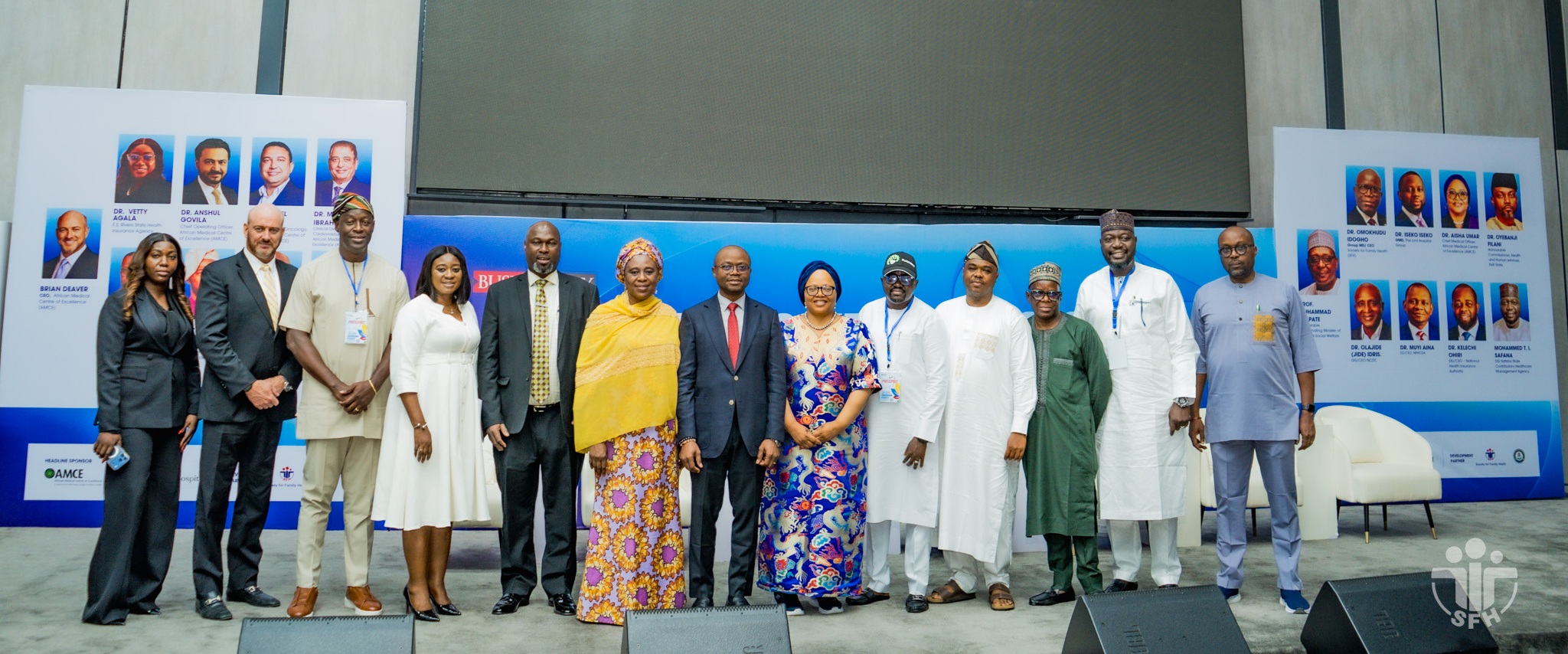
Nigeria’s ambition to achieve Universal Health Coverage (UHC) cannot be separated from how the country finances, manages and delivers healthcare. As the health sector navigates persistent financing gaps, uneven implementation across states, donor dependency and increasing pressure on government resources, the need for a health financing system that is sustainable, accountable and capable of delivering measurable outcomes has never been more urgent.
This was the focus of the BusinessDay Health Conference 2026, which examined the implementation of the Basic Healthcare Provision Fund (BHCPF) and its role in strengthening Nigeria’s health system. The discussions came at a critical time, with growing calls to move beyond funding individual programmes towards building systems that can sustainably finance essential services and deliver quality care to Nigerians. The conference brought together perspectives from government, health agencies, development partners, and private-sector stakeholders on financing, accountability, state ownership, quality of care, digital health, local manufacturing, and the health workforce.
For Society for Family Health (SFH), this transition must include a deliberate shift from fragmented, externally dependent financing to stronger domestic resource mobilisation and greater government ownership. Representing SFH Group CEO, Dayyabu Yusuf, Group Director, Impact Partnership and Engagement, emphasised the need to rethink where health financing comes from and how it is sustained. While development partners remain important to Nigeria’s health progress, sustainable health outcomes require stronger domestic financing, accountability and political commitment. SFH also stressed the importance of ensuring that funding translates into functioning services and measurable improvements in people’s health, rather than being assessed by disbursement volumes alone.
In her keynote address, Dr Salma Anas, Special Adviser to the President on Health, reinforced the connection between public trust and tangible health outcomes. She noted that Nigerians need to see the difference public health investments make in their lives, emphasising that Universal Health Coverage is not simply about putting infrastructure in place, but about ensuring health facilities and systems are functional. She also underscored the importance of transparency, data and digital accountability in tracking public resources, while stressing that health is integral to national development because healthier families contribute to a healthier workforce.
Representing the Coordinating Minister of Health and Social Welfare, Prof. Ali Pate, Dr Uzoma Nwankwo, Director, BHCPF, highlighted the BHCPF's statutory foundation and its role in financing basic healthcare. His remarks reinforced the need to protect and strengthen the Fund while improving transparency around its utilisation. He also called for consideration of an increase in the statutory allocation to the BHCPF, and expressed the expectation that the conference’s deliberations would contribute to a communiqué capable of advancing practical recommendations for Nigeria’s health financing system.
The conference explored these questions through two key plenary discussions: “Who Is Accountable When BHCPF Doesn’t Work?” and “From Money to Strengthening State Ownership, Accountability, and Quality of Care.”
The first plenary, facilitated by Dr Olumide Okunola, Senior Health Specialist, World Bank, examined accountability across the different levels of government responsible for healthcare delivery. While the BHCPF provides a protected statutory mechanism for directing resources to basic healthcare, discussions highlighted that federal financing alone cannot guarantee results. Effective implementation requires corresponding ownership and accountability structures at state and local government levels, alongside transparent tracking of funds and stronger oversight of how resources translate into services at facility level.
Experiences from states including Abia, Katsina, Plateau and Rivers demonstrated both the potential and the gaps in implementation. Discussions pointed to improvements in access and health outcomes where states have actively leveraged financing mechanisms, while also highlighting persistent challenges including inadequate equipment and beds in some primary healthcare facilities, weak regulatory oversight, laboratory gaps and uneven access to services.
The conversation also reinforced that primary healthcare cannot function in isolation. Effective referral pathways, functional laboratories and pharmacies, adequate human resources and links to secondary and tertiary care are essential to ensuring that investments at the primary level result in quality, continuous care.
The second plenary, moderated by Dr Kolade Oluwatosin, Sexual Reproductive Health and Health Systems Strengthening (SRH/HSS) Specialist, UNFPA, shifted the conversation from the availability of resources to the more fundamental question of how Nigeria can build ownership and sustainability around those resources. Speakers examined the roles of government, health purchasers, providers and partners, with a strong emphasis on moving towards public financing that can reduce reliance on external support.
Domestic resource mobilisation emerged as a critical priority. Discussions explored options such as health-related taxes, converting high out-of-pocket spending into structured health insurance financing and consistently meeting the 15 per cent health budget commitment under the Abuja Declaration. The message was clear: Nigeria needs to build a financing architecture that can withstand changes in donor priorities while protecting access to essential health services.
The plenary also connected financing to other building blocks of a resilient health system. Local manufacturing was identified as an opportunity to reduce the cost of medicines and health commodities, while better incentives, purchasing commitments and solutions to energy costs could help make domestic production more viable.
Digital health and data systems were equally recognised as critical to accountability and decision-making. With Nigeria still facing significant gaps in digitised and interoperable health information, the proposed Health Digital Office could provide a foundation for stronger digital health infrastructure and better use of health data.
Human resources remained another critical concern. The continued migration of health workers, alongside questions around salaries and purchasing power, underscores that financing a health system is not only about infrastructure and commodities. Nigeria must also invest in and retain the people who make healthcare work.
Ultimately, the conversations reinforced a fundamental principle: trust in the health system is earned through performance. Nigerians need to see that resources allocated to healthcare result in functioning facilities, available services, quality care and better health outcomes.
For SFH, strengthening Nigeria’s health system therefore requires more than increasing funding. It requires sustainable domestic financing, stronger state ownership, transparent accountability, better use of data, investment in the health workforce and a health system designed around measurable outcomes.
As Nigeria continues its journey towards Universal Health Coverage, the priority must be to build systems that can deliver beyond individual projects and funding cycles. Systems that are trusted, accountable, resilient and capable of improving health outcomes for every Nigerian.